Cost, Compliance & Long-Term Value
Maximise your investment. Protect your stock. Keep residents safe and satisfied.
For Housing Associations, every replacement programme has to work harder than ever.
Budgets are tight. Compliance duties are growing. Residents expect clear communication, safe homes, and work that is finished the first time properly.
That makes cost control important. But the lowest unit price is rarely the best measure of value. A good programme looks at the full cost of the work: survey time, access, specification, resident disruption, remedial visits, energy performance, safety evidence, and long-term asset life.
That is where windows, doors, and AOVs need careful planning. They affect warmth, security, ventilation, fire safety, resident comfort, and future repair demand. When the specification is right, the programme runs more smoothly. When it is wrong, the cost often comes back later.

Cost matters. Whole-life cost matters more.
Housing Associations will need to show value for money across planned works, day-to-day repairs and compliance budgets.
That means looking beyond the purchase price. A cheaper product can become expensive if it needs extra site adjustment, creates more call-backs, fails to meet current guidance, or leaves gaps in handover evidence.
A better measure is whole-life value. Ask what the product and supply plan will do over the next 10, 20 or 30 years.
The right answer is not always the most expensive product. It is the product that does the job properly, fits the asset, meets the standard and keeps the programme moving.

Compliance is now part of asset value
Compliance is no longer a separate box at the end of a planned works project. It sits inside the asset plan from the start.
Under Awaab’s Law guidance for social landlords, the requirements started on 27 October 2025 for all emergency hazards and damp and mould hazards that present a significant risk of harm. The scope widens in 2026 to include hazards such as excess cold and excess heat, falls, structural collapse, fire and electrical hazards. In 2027, it widens again to all remaining HHSRS hazards, apart from overcrowding, where they present a significant risk of harm.
For window and door programmes, this matters. A failed external door can affect security. Poor windows can affect heat loss and excessive cold. Poor ventilation can increase damp and mould risk. Unsafe openings can create fall risk.
Housing Associations will need clear stock data, clear resident reporting routes and clear records of what was found, what was fitted and what work remains.
Windows and doors are key building components
The New Decent Homes Standard policy statement treats windows and external doors as key building components. It states that a dwelling is not in a reasonable state of repair if one or more key building components need replacing or need immediate major repair.
The same policy statement defines disrepair for windows and external doors in plain terms. They are a problem if they are not weather-tight, cannot be secured or locked, or cannot be used properly. For windows, examples include distorted frames, broken glass, defective ironmongery and failed seals where they cause leaks or prevent the window from being secured or locked.
That gives asset teams a practical route into survey planning.
A good survey does not just ask whether the window is old. It records whether it works, locks, seals, ventilates and supports resident safety.

Energy performance needs ventilation built in
Better windows and doors can help improve comfort and reduce heat loss. But tighter homes still need enough fresh air.
Approved Document F 2026 takes effect on 24 March 2027 for building work in England that is not connected with higher-risk building work, and on 24 September 2027 for work connected with higher-risk building work. The guidance notes that energy efficiency measures in existing dwellings can reduce infiltration and cause under-ventilation.
For replacement windows, the guidance says that where existing windows have background ventilators, the replacement windows should include background ventilators that are no smaller than the original ventilators and are controllable by the occupant or automatically. Where existing windows do not have background ventilators, replacement windows are likely to increase airtightness, so ventilation provision needs to be considered.
This is where long-term value is often won or lost. If a programme improves U-values but creates avoidable condensation complaints, it has not delivered the right outcome for residents.
Housing Associations will need to include ventilation checks early, not after manufacture. That means checking the existing ventilation strategy, extractor provision, background ventilators, property type and resident use before final sign-off.

Part L 2026 changes the performance baseline
Approved Document L 2026 also takes effect on 24 March 2027 for building work in England that is not connected with higher-risk building work, and on 24 September 2027 for work connected with higher-risk building work.
For existing dwellings, the guidance lists limiting standards for new and replacement fabric elements. It lists windows at a maximum U-value of 1.4 W/m²K or Window Energy Rating Band B minimum. It also lists doors at 1.4 W/m²K, or the relevant Doorset Energy Rating Band, depending on door type.
Housing Associations will need specifications that reflect the new baseline where it applies. They will also need clear evidence from suppliers and installers, including product performance, installation records and handover information.
Less chasing. Fewer gaps. Better audit trails.
AOVs need early design checks
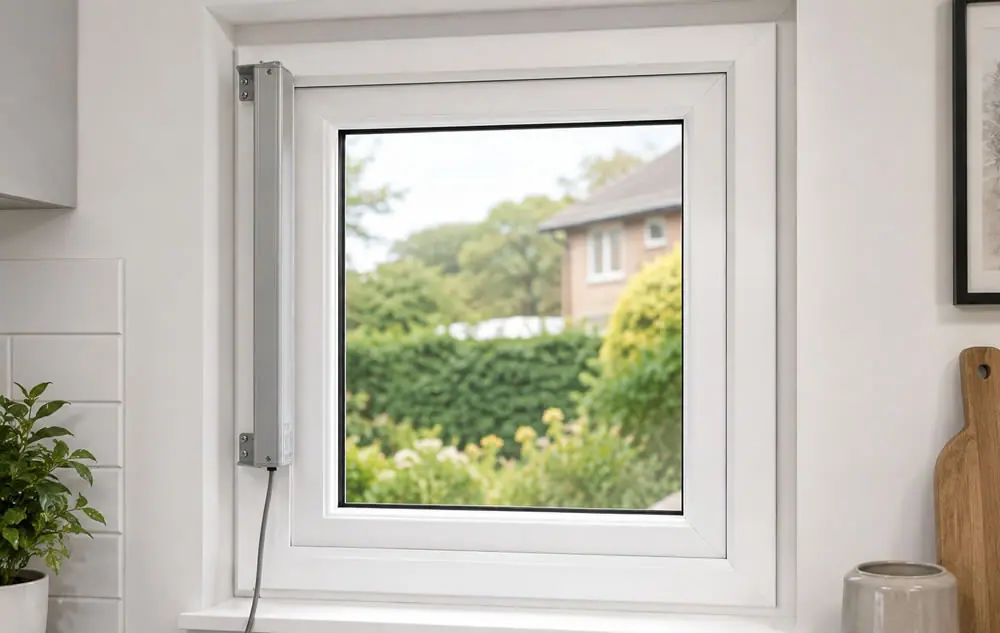
AOVs sit close to fire strategy, resident safety and building control. They need more planning than a standard window replacement.
The 2026 Approved Document B fire safety amendments take effect on 30 September 2026 in England. The changes include guidance on more than one common stair in blocks of flats with a top storey 18m or more in height, plus provisions to support evacuation lifts. The amendments also state that common corridors and lobbies need a means of ventilation to control smoke and protect common stairs.
For AOV replacement, Housing Associations will need to check the fire strategy, actuator requirements, vent size, controls, power supply, access for maintenance and Declaration of Performance information before orders are placed.
AOVs are not the place to save money by cutting corners. Good value means a product that fits the design, operates as required, and gives the team the evidence they need.
Higher-risk buildings need the right approval route
For higher-risk buildings in England, the Building Safety Regulator’s building control approval guidance states that BSR oversees and approves building work for buildings that have at least 7 storeys or are at least 18 metres high, and have at least 2 residential units, or are hospitals or care homes.
The guidance also states that clients must make sure building control approval is granted before building work starts, where approval is required. For existing higher-risk buildings, applications need to explain how the effect of the work on the building was assessed, the result of those assessments, and how the work will comply with Building Regulations.
This makes early evidence important. Housing Associations will need the right drawings, specifications, fire information, product data and installation records in place before the programme starts.

Resident satisfaction protects programme value
Resident satisfaction is not a soft measure. It affects access, completion, complaints, aftercare and future trust.
Clear communication saves time. Residents need to know what is happening, when the work will happen, how long it will take, what they need to move, and who to speak to if something changes.
Good products also need a good handover. Residents need to understand locks, restrictors, trickle vents, cleaning, care and how to report faults.
Simple information prevents avoidable call-backs.
How to balance cost, compliance and long-term value
A strong replacement programme brings commercial, technical and resident planning together.

One supplier. Clearer control.
Working with too many suppliers can add cost, time and admin. Different lead times, different paperwork and different product standards can make a planned programme harder to control.
A single supply route can make life simpler. It helps asset teams keep specifications consistent, manage deliveries and reduce gaps in evidence.
That is where Listers can help.
We support Housing Associations, Local Authorities and Planned Maintenance Contractors with windows, doors and AOVs for social housing projects. We help with specification, product choice, compliance paperwork and programme supply.
Built for trade. Simple as that.
Find out more about Housing Association window, door and AOV replacement programmes with Listers.
Plan with confidence
Cost, compliance and long-term value do not need to pull in different directions.
With the right plan, Housing Associations can control spend, support compliance and protect homes for the future. The key is to specify early, check the evidence, keep residents informed and work with suppliers who understand planned works.
Less waiting. More fitting.